
L’idée de “retourner en classe”, “être à nouveau un élève” ou “apprendre quelque chose de nouveau” ne vous fait peut-être pas rêver et pourtant vous avez toujours voulu parler anglais ! Que ce soit pour votre vie professionnelle ou personnelle, nous sommes convaincue qu’apprendre à communiquer en anglais fera reculer les barrières pour communiquer entre gens de nationalités différentes, mais aussi, vous aidera à briser l’effet plafond de verre qui vous empêche d'évoluer aujourd’hui. La maîtrise de l’anglais deviendra ainsi le moteur pour réaliser vos rêves et raviver vos ambitions. Ensemble nous prouverons que vous pouvez le faire et que vous allez le faire. Venez rejoindre la communauté grandissante #E4F. Voyez grand, sautez le pas, JUMP avec English 4 French!
Episodes
May 29, 2026
May 29, 2026
15 min
#6 A1 Superlatives
Hello, and welcome back to podcasts at English for French. I’m Alison and today’s podcast is all about superlatives (aujourd’hui on va regarder comment utiliser des superlatifs en anglais).We use superlatives all the time so they can be very useful.
Superlative comes from the Latin and old French word “super,” which means to be above or beyond. We use superlatives when we look at one thing and compare it to other similar things and find it to be at the upper or lower limit in quality, quantity, etc.—it could be people, cities, cars, or a day of the week—and we describe the higher or lower quality, size between them.(Les superlatifs sont utilisés pour décrire quelque chose et sa qualité , quantité , taille, etc., en comparaison avec toutes les autres choses dans la même catégorie , par exemple, « my dog is the best dog », en utilisant le superlative on indique que « mon chien est le meilleur chien de tous les chiens ».)
Short Words (1 Syllable)
Let’s start with the most common. In English, we categorize our adjectives by how long they are—specifically, by how many syllables, or vowel sounds, they have.
When an adjective is short like tall, fast, small, or cold, the rule is easy. We put the word “the” in front of the adjective and we take that short adjective, and we add -est directly onto the end of it. All superlatives start with the word “The”, the biggest car, the smallest cat etc.
The Structure: The + Superlative
Let's listen to how this sounds in natural, everyday conversation:
- Tall – The tallest: Imagine you are standing next to your friends. “Tom is the tallest of my friends”
- Fast - Fastest: Think about transport. “Most cars are fast but the Ferrari is the fastest”
- Old - Oldest: “He has lots of animals but his dog is the oldest”
The "CVC" Spelling Rule
Now, let's pause for a quick written tip. When you are writing these down, look closely at short words like big, hot, or sad. These words end in a specific pattern: a Consonant, a Vowel, and another Consonant (CVC). Si l’adjectif d’une syllabe finit par une consonne, une voyelle et une consonne, on double la dernière consonne.
When a one-syllable word does this, we must double that very last letter before we add our -est ( there are exceptions with vowel sounds like slow). Let's listen to how they sound.
- Big – the biggest: (spelt b-i-g-g-e-s-t). "An elephant is the biggest land mammal”
- Hot – The hottest: (spelt h-o-t-t-e-s-t). "The South of France is the hottest region ."
So..Short words? Just add the and -est. Donc pour les adjectifs d’un syllable on ajoute –the et « est » (et si le mot finit par consonne, voyelle, consonne on double la dernière consonne.)
The "Y" Words (2 Syllables)
So here’s the rule for words ending in Y with 2 syllables, words we use for example to describe feelings and traits, like happy, heavy, easy, or friendly.
. When we want to make a superlative, we add “the” in front and drop the -y completely from the adjective, and then add our superlative ending -iest.
Let's break these down with some clear examples so you can hear the rhythm:
- Happy- the Happiest: (spelt h-a-p-p-i-e-s-t). Imagine your friend had a bad week last week, but today they are smiling. You can say, "”This is the happiest she has ever been” “c’est la plus heureuse elle n’a jamais été”.
- Heavy – the Heaviest: Think about packing for a vacation. You lift your suitcases. "The blue suitcase is the heaviest." “La valise bleue est la plus lourde”.
- Easy-the Easiest: Maybe you tried learning a language before, but English is better for you. You might say, "English grammar is the easiest”( “La grammaire anglaise est la plus facile”) Notice how the rhythm changes slightly, but the ending sound is exactly the same as our short words. The happiest, the heaviest, the easiest.
The Long Words (2 or More Syllables)
Now the third group. What do we do when an adjective is long a, 2 or more syllables? Words like beautiful, expensive, interesting, and comfortable.
English speakers prefer a smooth vocal flow, so we do not change the long adjective at all. The adjective doesn’t change, but we place “the” and then add a word right in front of it: most/least . Pour garder la musicalité de l’anglais, nous ne changeons pas les adjectifs longs et on ajoute « the »(le, la , les ) devant l’adjectif(comme pour tous les superlatifs ), et puis on ajoute most (plus) ou least ( moins) devant l’adjectif
The Structure: The most/least + Adjective
Let's listen to how this sounds when we put it into full sentences:
- Expensive- The most expensive: Think about shopping. You see a beautiful dress in a shop window . “That is the most beautiful dress in the shop”
- Beautiful-The most beautiful: Imagine travelling. You are standing on a hill looking at a sunset over the ocean. You might think, "This is the most amazing sunset I have ever seen” (C’est le plus beau coucher du soleil je n’ai jamais vu”
- Interesting- The least interesting: Think about books or movies. "His last book was the least interesting” (son dernier livre était le moins intéressant)
So, for long words, remember the golden rule: Don't change the adjective.
(Irregular Superlatives)
Irregular adjectives. These are words that don’t follow the rules. They don't take an "-est",/iest and they don't use the word "most/least." Les superlatifs irréguliers ne suivent pas les règles .
For A1 level, there are really only three irregulars that you need to know because you will use them often.
Good
The word good does not become "goodest". Instead, it transforms into the word the best. Le mot “good “ , bien , devient le mot best , meilleur(e).
- Let's think about food. You go to a restaurant, and the food is okay. But then you go home and eat your mother's cooking. You would say, "My mother's cooking is the best”
- Bad
The word bad does not become "baddest". It transforms into the worst (spelt w-o-r-s-t).Le mot “bad” , mauvais devient “the worst”, le /la/les pire .
- Think about the weather. Yesterday it was raining, but today it is raining and cold. "The weather today is the worst of this week”
- Or think about being stuck in traffic. "The morning traffic is the worst”
Far
The word far becomes furthest, not more far, le mot “far” devient the furthest, le /la/les plus loin.
- “Rome is the furthest she has travelled”.. “Rome est le plus loin elle a voyage”
Now that we have seen all four categories, let’s take a moment to review.
When you want to compare one thing to all other things, ask yourself just one question: How long is the word?
|
Adjective Type |
Base Word |
Comparative Form |
Example Sentence |
|
Short (1 Syllable) CVC |
Fast Hot |
The Fastest The Hottest |
A Ferrari is the fastest car Provence is the hottest region |
|
2 Syllables)Ends in "Y" |
Easy |
The Easiest |
Lesson #1 is the easiest lesson |
|
Long (2+ Syllables) |
Comfortable |
The most/least comfortable |
The sofa is the most comfortable piece of furniture |
|
Irregular |
Good / Bad/Far |
The best The worst The furthest |
This is the best concert This is the worst day this month This is the furthest I have run |
Today, I want you to try a little exercise. Look at the things around you right now. Look at your phone, your shoes, your cup of coffee, or the weather outside your window. Try to make just two or three sentences in your head, using superlatives ( the best cup of coffee , the most comfortable shoes etc. Pour vous entrainer, regardez autour de vous, essayez d’utiliser des superlatifs pour des choses simples, faites des phrases.
Is this the best or the worst podcast? The more you practice, the more natural it will become.
Thank you for listening. I hope you enjoyed this podcast. See you soon at podcasts with Alison at English for French. Keep practicing
Cheers
May 18, 2026
May 18, 2026
6 min
#3 A1 : ADJECTIVES
Hi, my name is Alison. Welcome back to podcasts at English for French. Today’s podcast is all about adjectives. Adjectives are great words that can add colour to our language, making our phrases and sentences more interesting. Adjectives give us information about a person or a thing. (Les adjectifs en anglais nous donnent de l’information et des descriptions des gens et des choses; ils ajoutent de la couleur à notre langage).
It is a good idea to have a small number of positive and negative adjectives to help you describe things.
Adjectives in English always come before the noun or after the verb to be. (Les adjectifs viennent devant les noms en anglais or après le verbe être.
Here are some examples:
I have a beautiful dog… My dog is beautiful
He has green eyes… His eyes are green
The big house ..It is a big house.
It’s a lovely, sunny day... The weather is lovely and sunny.
Cats are beautiful animals
Adjectives can be used to describe how something or somebody feels, ( se sentir), smells (sentir), tastes (goût), or looks (avoir l'air de).
Examples:
You look tired .. tu as l’air fatigué.
This casserole smells great (ce ragoût sent très bon).
He feels tired ..il se sent fatigué.
That ice cream tastes delicious (cette glace est delicieuse).
We can use negative adjectives too
That fish smells bad .. ce poisson sent mauvais
Sharks are dangerous .. Les requins sont dangereux.
She is unhappy.. elle est malheureuse
Compare the following
is
he looks tired
feels
are
They look happy
feel
is
The meat smells delicious
tastes
Here is a list of some positive adjectives
Pause the podcast and try to think of the opposite , negative adjective
For instance : good / bad
Voici des adjectifs positifs, mettez en pause après chacun et essayez de trouver l’opposé / les adjectifs negatifs qui correspondent.
here we go..
Easy difficult
Interesting boring
Quiet noisy
Beautiful ugly
And now some adjectives and their opposites
Late early (tard/ tôt)
Cheap expensive ( Pas cher/cher)
cold hot ( froid/chaud)
empty full (vide/plein)
light heavy ( leger/lourd)
right wrong (correct/incorrect)
Adjectives in English are invariable; there is no masculine or feminine form and no singular or plural form (les adjectifs sont invariables , pas de masculin ni feminin, singulier ni pluriel.)
The big, black dogs(plural ) the big, black dog (singular)
A beautiful ,yellow flower (singular) and the beautiful,yellow flowers (plural)
They are tired (plural), he is tired (singular).
The song sounds amazing (singular), and the songs sound amazing (plural)
Practice using adjectives by taking an object or a person and describing it /them.
Entrainez-vous à faire des phrases en décrivant des personnes ou des choses.
I have a pretty, small, grey female cat.
My other cat is a beautiful, big, three-coloured male.
You can use many adjectives, and the more you practice, the easier it is. So practice with English for French and have fun.
Cheers
May 6, 2026
May 6, 2026
8 min
Hi,
My name is Alison and welcome back to podcasts with English for French
Today’s podcast is about the verb “To have” ( le verbe avoir) the most important verb in any language. We use the verb “to have” to describe possession and certain descriptions.
First , we will review the pronouns ( les pronoms) : Je..I
Tu..you
Il ..he
Elle.. she
Il/elle neutre .. it Nous ..we
Vous .. you Ils/elles ..They
You will notice that the tu et vous in English are the same word..you, in English we do not have separate pronouns , also for the ils et elles .. they , the pronoun is the same for masculine or feminine plural.
So tu et vous have the same conjugation : have
And the third person singular , he ,she, and it have the same conjugation : has
There is a contracted form of these conjugations which I have pronounced after the full form and we normally use the contracted form with got (la forme contracté du verbe est prononcé après la forme pleine et normalement on utilise en contracté avec la forme “to have got”)
The conjugation of the verb is as follows:
J’ai.. I have.
Tu as ..you have Il a..he has
Elle a ..she has
I’ve got You’ve got
He’s got She’s got
Il/elle (neutre) a..it has Nous avons..we have Vous avez.. you have Ils/elles ont .. they have
It’s got We’ve got You’ve got They’ve got
So if I want to describe what I possess or for a description,I can say.. ( pour décrire ce qu’on possède ou pour un descriptif )
J’ai un bel appartement.. I have a nice flat.. I’ve got a nice flat
Tu as / vous avez un beau chien.. You have a beautiful dog.. You’ve got a beautiful dog.
Il a des yeux bleus.. He has blue eyes ..he’s got blue eyes.
Elle a des yeux verts.. she has green eyes.. She’s got green eyes
Il/elle ( la maison) a un balcon.. it (the house) has a balcony.. it’s got a balcony
Nous avons deux chats.. we have two cats .. we’ve got two cats
Ils/elles (les arbres) ont des feuilles vertes .. they (the trees) have green leaves.. They’ve got green leaves
The verb to have is used in all tenses. In today’s podcast, the verb is in the present simple to describe something in the present or a fact.
I have English lessons every day , (fact and a habit/permanent situation, un fait ou une situation permanente).. J’ai des cours d’anglais tous les jours.
The verb to have is very useful ( utile)
To make a sentence with the verb to have negative, we add an auxiliary to our verb, c’est le ne..pas en anglais, the auxiliary for the present simple tenses is do/does ( does and doesn’t are the auxiliary forms for the third person, he/she/it,(la forme de l’auxiliaire pour la troisième personne est does/doesn’t), so for the negative we add “n’t” to the auxiliary which become don’t and doesn’t
Je n’ai pas de chien..I don’t have a dog.
Tu n’as pas de chats..you don’t have cats.
Il n’a pas d’enfants.. He doesn’t have children.
Elle n’a pas le temps .. she doesn’t have the time.
Il (le magasin) n’a pas de livres..it (the shop) doesn’t have books.
Elle (la maison) n’a pas de terrasse .. it (the house) doesn’t have a patio. Nous n’avons pas de jardin.. we don’t have a garden.
Vous n’avez pas de leçons .. you don’t have lessons.
Ils/elles n’ont pas d’animaux domestiques.. they don’t have pets .
Now you try
Nous pouvons remplacer les pronoms par des noms, comme en français. Repeat the following phrases:
J’ai une belle maison .. I have a beautiful house.
Tu as un rhume.. you have a cold.
L’homme n’a pas de barbe..The man doesn’t have a beard.
. Ma mère a deux gros chats.. my mother has two, big cats.
L’arbre a des jolies fleurs.. the tree has lovely flowers.
Nous n’avons pas de classe aujourd’hui.. we don’t have classes today. Vous avez une belle terrasse.. you have a beautiful patio.
Mes élèves ont des devoirs.. my students have homework
To ask a question with the verb to have, all we do is put the auxiliary, do or does in front of the pronoun/ subject (on mets l’auxiliaire devant le sujet pour poser une question.
For example:
As-tuunchat?..Doyouhaveacat?
A-t-il un bon professeur ? .. Does he have a good teacher?
Ont-ils des enfants? .. Do they have children ?
Quand avez-vous votre cours d’anglais ? .. When do you have your English lesson?
I hope you have enjoyed this podcast. Make phrases to help you memorise this verb and have fun.
See you soon at English for French
Cheers
Apr 24, 2026
Apr 24, 2026
8 min
#1 A1 verb To Be
Hi ,
My name is Alison and welcome back to podcasts with English for French
Today’s podcast is about the verb To be ( le verbe être) the most important verb in any language. We use the verb “to be” to describe people, things, and situations.
First , we will review the pronouns ( les pronoms) :
Je..I
Tu..you
Il ..he
Elle.. she
Il/elle neutre .. it
Nous ..we
Vous .. you
Ils/elles ..They
You will notice that the tu et vous in English are the same word..you, in English we do not have separate pronouns , also for the ils et elles .. they , the pronoun is the same for masculine or feminine plural.
So tu et vous have the same conjugation : are
And the third person singular , he ,she, and it have the same conjugation : is
The conjugation of the verb is as follows
There is a contracted form of these conjugations which I have pronounced after the full form (la forme contracté du verbe est prononcé après la forme pleine)
Je suis .. I am. I’m
Tu es ..you are You’re
Il est..he is He’s
Elle est ..she is She’s
Il/elle neutre it is It’s
Nous sommes..we are We’re
Vous êtes.. you are You’re
Ils/elles sont .. they are They’re
So if I want to describe myself I can say :
Je suis Anglaise.. I am English
I can describe how I feel: je suis contente ..I am happy
Where am I? Je suis dans la cuisine..I am in the kitchen
Tu es fatigué.. you are tired
Il est français .. he is French
Elle est triste .. she is sad
Il est grand ..it is big ( pour parler d’un objet , nous utilisons pas de masculin ni feminin en anglais donc pour une maison, par exemple, elle est belle ..it is beautiful not she is beautiful).
Nous sommes contents .. we are happy
Vous êtes des professeurs .. you are teachers
Ils / elles sont anglais .. they are English
The verb to be is used in all tenses.In today’s podcast, the verb is in the present simple to describe something in the present, something that is always true, or habits
I am an English teacher ,(fact and a habit/permanent situation, un fait ou une situation permanente).. Je suis une professeure d’anglais.
The verb to be is very useful ( utile)
To make a sentence with the verb to be negative, we add “not” to our verb, c’est le ne..pas en anglais.
Je ne suis pas française.. I am not French
Tu n’es pas petit You are not small
Il n’est pas occupé He is not busy
Elle n’est pas anglaise She is not English
Il n’est pas un livre anglais It is not an English book .
Elle n’est pas très bien ( par exemple une série )It is not very good
Nous ne sommes pas contents ..We are not happy .
vous n’êtes pas à Paris ..You are not in Paris ..
Ils/elles ne sont pas ici ..They are not here
We can use a contracted form of the negative, by replacing not with
an n apostrophe t, = n’t
I’m not
You aren’t
He isn’t
She isn’t
It isn’t
We aren’t
You aren’t
They aren’t
Now you try
Nous pouvons remplacer les pronoms par des noms, comme en français.
Repeat the following phrases:
Je suis triste.. I am sad
Tu es content..You are happy ( tu es content)
L’homme n’est pas grand ..The man isn’t tall . He isn’t tall
. Ma mère est gentille ..My mother is kind . She is kind.
La fleur est belle .. The flower is beautiful,it is beautiful.
Nous ne sommes pas dans la classe ..We aren’t in the classroom.
Vous êtes , tous les deux , dans le restaurant ..You are both in the restaurant .
Mes élèves sont contents aujourd’hui ..My students are happy today.
To ask a question with the verb to be, all we do is put the verb in front of the pronoun ( on mets le verbe forme devant le sujet pour poser une question.
For example:
Es-tu content? Are you happy?
Où est-il? Where is he?
Sont-ils anglais? Are they English?
I hope you have enjoyed this podcast. I have included a table for you to complete to practice the conjugation of the verb to be. Make phrases to help you memorise this verb and have fun.
See you soon at English for French
Cheers
#1- VERB TO BE
- Complétez le tableau suivant
|
SUBJECT |
TO BE + |
TO BE + short |
TO BE - |
TO BE - short |
TO BE ? |
|
I |
|||||
|
You, we, they |
|||||
|
He, she, it |
Jun 16, 2025
Jun 16, 2025
Jun 16, 2025
Jan 16, 2025
Jan 16, 2025
4 min
Hi
Here is the latest podcast all about the schwa sound , the most common sound in the English language
Enjoy
Jan 4, 2025
Jan 4, 2025
4 min
Hi,
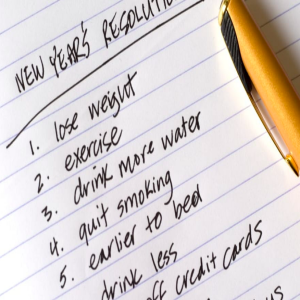
Today's podcast is all about new year resolutions nd whether we keep them . So jump right in to podcasts with Alison at English for French
transcript :
Hi, welcome back to E4F podcasts. I’m Alison and today we are going to talk about New year’s resolutions. Do you make any ? Do you keep them? Are they an important part to the start of a new year?
All this and more, so let’s jump into this weeks’ podcast.
Here we go..
Most of us do it, every year we make resolutions. Sometimes funny, sometimes poignant, but how often do we keep them and how do we feel when we don’t succeed?
Whether it is a fitness, or new health fad, giving up something you enjoy because it isn’t good for you, it is not easy to stay motivated.
Dry January, while you are suffering from your New Years’ eve hangover, is easy, but as the month moves on the idea seems less necessary and so temptation creeps in. Fat-free February is fine, until we are invited to share a delicious, hot crêpe on Pancake Day,(Shrove Tuesday) with sugar and lemon or fat-laden Nutella, and our determination falters.
So, should we rethink our resolutions, maybe be more realistic or gentler on ourselves, choose something with more meaning?
Learning English for business or leisure, using less electricity or petrol, planting trees,? You name it there are plenty of opportunities to change our habits for the better good of some or all .Altruism is a strong motivation ,spurring us to new routines and habits maybe doing voluntary work as I do, a truly beneficial pastime for everyone including the volunteer.
Tiktok and other social media have become an infinite source of trends, not just dogs and cats being clever, and many are indeed time- wasting ones, but some can spark an idea which can lead to good resolutions.
My latest fad is something called “Swedish death cleaning”, sounds morbid right? Well yes, initially based on how one clears a loved one’s house when they pass away, it has now become a new trend, how to declutter your home, ruthlessly, little or no sentimentality allowed. Items lurking at the back of my wardrobe unworn for years, knickknacks collecting dust but kept for sentimental reasons, out they go ... into the recycling , donation or rubbish bag, they say if it is difficult to choose then just one or two articles a day is a start, 11 recycling and donation bags later I am still going .
This can be adapted to your needs, some people “tidy up” their friends list on Instagram and Facebook, or delete unwanted contacts on their phones
, print out photos and liberate space in their data banks, whatever suits you, it is liberating.
Whatever you choose as a resolution , and you may choose not to make any of course , make it something positive , for example taking the time to sit in the sun in a sunny spot , close your eyes for ten minutes with your phone switched off can make a difference to your mood during a hard working day, be kind to yourselves , losing 3 stone before the 31st January is neither realistic nor gentle to your mind and body.
Remember the positive effect of succeeding is often more important than the actual reason you made the resolution in the first place.
So, jump into the new year, come and learn a new language with English for French online or in one of our centres. That’s a great resolution. I hope you enjoyed this week’s podcast, happy new year to you all from the E4F team
Cheers then.

Dec 6, 2024
Dec 6, 2024
8 min
Hi everyone
a new podcast about someof the Christmas traditions in the UK
podcasts are a great way to improve your oral comprehension in English
Here we go..JUMP